How we weigh a claim
Online writing about the Viking Age and Norse mythology frequently falls into one of two traps: either repeating thirteenth-century saga anecdotes and nineteenth-century folklore as if they were unvarnished ninth-century journalism, or dismissing all literary sources out of hand.
At Tovelsagasprnt, we apply classical Scandinavian source criticism (källkritik). Every article begins with a physical survivor—a stone monument in situ, a dated timber posthole, or an ink folio with a real library shelfmark—and traces how far the evidence actually supports the popular story.
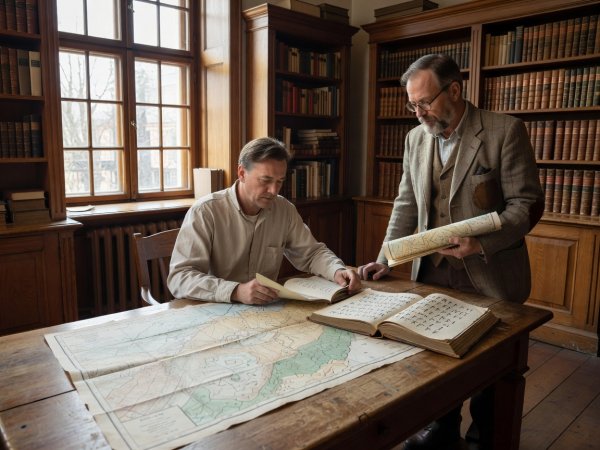
Our four-step verification protocol
1. Catalog Identification
No runic inscription is cited without its official signum in the Scandinavian Runic-text Database (e.g., U 1161, DR 42, Ög 136). No manuscript is cited without its repository shelfmark (e.g., GKS 2365 4to).
2. Chronological Distance
We explicitly state the time gap between when an event or belief supposedly occurred (such as a 9th-century raid) and when the surviving text was inked onto parchment (often 250–400 years later).
3. Material Cross-Check
Whenever a literary text describes weapons, ships, temples, or voyages, we test it against dendrochronology, osteology, strontium isotopes, and stratigraphy from excavated Scandinavian sites.
4. Transparent Uncertainty
When runologists or archaeologists disagree—such as over the riddles of the Rök stone or the social identity of the warrior in Birka grave Bj 581—we present both competing scholarly interpretations.
Contributing researchers

Specializes in eleventh-century Upplandic memorial stones, eastern voyage inscriptions, and the transition from runic epigraphy to Latin script in medieval Sweden.

Focuses on clinker ship construction, iron production sites across the North Atlantic rim, and Iron Age hall complexes in southern Scandinavia.