Gods through surviving texts
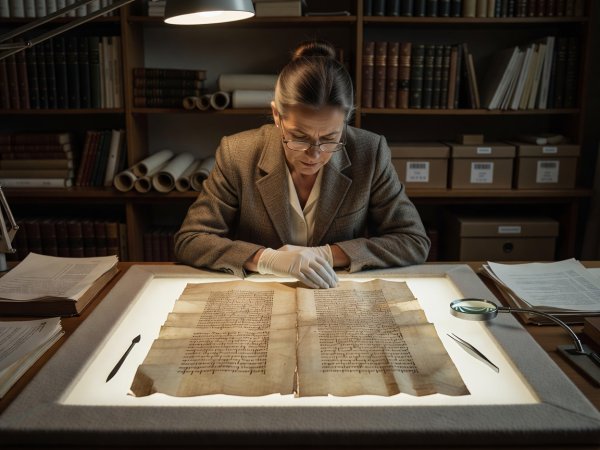
Start with a physical object: shelfmark GKS 2365 4to at the Árni Magnússon Institute in Reykjavík, better known as the Codex Regius of the Poetic Edda. Written on forty-five calfskin leaves around 1270 CE—with an eight-leaf gap known as the "Great Lacuna" missing from its center—this single unassuming book is the sole surviving source for poems such as Þrymskviða (Thor’s stolen hammer), Lokasenna (Loki’s flyting in Ægir’s hall), and the bulk of Hávamál.
Had that one volume perished in a farmhouse fire before Bishop Brynjólfur Sveinsson acquired it in 1643, our modern picture of Norse mythology would look radically thinner. Recognizing how fragile that transmission chain is changes how we read every story of Odin, Thor, and Freyja.
The gap between pagan ritual and Christian parchment
Iceland converted to Christianity by arbitration at the Alþingi in 999 or 1000 CE; Norway, Denmark, and Sweden transitioned across the tenth and eleventh centuries. Yet the major literary compilations of Norse myth—the Poetic Edda, Snorri Sturluson’s Prose Edda (c. 1220), and Saxo Grammaticus’s Latin Gesta Danorum (c. 1200)—were all written down by educated Christians more than two hundred years later.
How much of what they recorded reflects genuine ninth- and tenth-century belief, and how much was shaped by thirteenth-century literary systematization? Scholars use three independent checks to test a myth’s age:
- Skaldic Meter (Dróttkvætt): Court poetry attributed to tenth-century skalds like Egill Skallagrímsson, Úlfr Uggason (composer of Húsdrápa around 985 CE), and Bragi Boddason uses rigid internal rhyme and alliteration. Altering a word breaks the meter, allowing linguists to date specific mythic kennings centuries earlier than the manuscripts that preserve them.
- Viking Age Iconography: Carved picture stones on Gotland (such as the Ardre VIII stone showing Loki, Sigyn, and Weyland the Smith’s forge) and Viking Age runestones (Altuna U 1161, Hørdum stone in Denmark, Gosforth Cross in Cumbria) depict specific mythic scenes in stone during the ninth to eleventh centuries.
- Theophoric Place-Names: Over a thousand Scandinavian farm and parish names preserve old cult sites—such as Odensala, Torslunda, Frövi, and Ulltuna—mapping which deities actually received local sacrifice rather than merely starring in entertaining poems.
Snorri's Prose Edda (c. 1220)
Presents Baldr as a blameless, luminous figure whose death is engineered by Loki with mistletoe, followed by a universal weeping campaign across all creation to free him from Hel.
Saxo Grammaticus (c. 1200)
In Book 3 of Gesta Danorum, Balderus and Høtherus are rival armed claimants fighting fiercely over Nanna, with no mistletoe, no Loki, and no weeping creation.
Interpretation Note: Why do Snorri and Saxo disagree so sharply on Baldr?
Neither author invented his version out of thin air. Tenth-century skaldic poem Húsdrápa (composed in Iceland around 985 CE to describe woodcarvings in Olaf the Peacock’s hall) confirms that Odin, Freyr, and Heimdall riding to Baldr’s funeral pyre—and the giantess Hyrrokkin launching his ship Hringhorni—were already known in western Scandinavia before Christianity. Saxo, writing in Denmark, drew upon different Danish heroic legends and euhemerized the gods into mortal kings. What survives is proof of regional variation across the North.
Four core manuscripts and what each preserves
| Manuscript & Shelfmark | Approximate Date | Current Repository | Key Mythological Contents & Quirks |
|---|---|---|---|
| Codex Regius (GKS 2365 4to) | c. 1270 CE | Árni Magnússon Institute, Reykjavík | 11 mythological poems (Völuspá, Grímnismál, Vafþrúðnismál, etc.) and 18 heroic lays. Copied from an earlier exemplar c. 1200–1240. |
| Hauksbók (AM 544 4to) | c. 1302–1310 CE | Reykjavík / Copenhagen | Contains an independent version of Völuspá that orders stanzas differently and includes stronger Christian eschatological echoes at the end. |
| Codex Upsaliensis (DG 11) | c. 1300–1325 CE | Uppsala University Library | Oldest surviving complete manuscript of Snorri’s Prose Edda; explicitly names Snorri Sturluson as compiler and offers shorter, punchier readings in Gylfaginning. |
| Flateyjarbók (GKS 1005 fol.) | 1387–1394 CE | Árni Magnússon Institute, Reykjavík | Preserves Hyndluljóð and late narratives like Sörla þáttr (where Freyja acquires the Brísingamen necklace from four dwarfs) alongside kings’ sagas. |
When stone corroborates parchment: Thor and Jörmungandr
One narrative passes all three historical tests with remarkable consistency: Thor’s fishing expedition to hook the Midgard Serpent (Jörmungandr) alongside the giant Hymir. We find it in:
- 9th-century skaldic verse: Bragi Boddason’s Ragnarsdrápa describes the scene painted on a wooden shield.
- 8th–11th-century stone carvings: Four widely separated carvings—the Ardre VIII picture stone on Gotland, the Altuna runestone (U 1161) in Uppland, the Hørdum stone in Thy (Denmark), and the Gosforth fishing stone in northwest England—all show the ox-head bait, the heavy fishing line, or Thor’s foot breaking through the hull planks.
- 13th-century Eddic texts: Both the poem Hymiskviða and Snorri’s Gylfaginning recount the episode, though Snorri adds that Thor braced his feet straight through the boat to stand on the sea floor—a detail directly visible on the eleventh-century Altuna stone.